Since 2024, Bitcoin (BTC) has posted four major corrections following interest rate hikes by the Bank of Japan (BOJ), with declines ranging from 18% to 28%. This dynamic puts renewed attention on the BOJ’s June 16 policy decision.
Data currently points to a variety of pressures on BTC, with BTC whale spreads and inflows possibly carrying more weight than Japanese monetary policy.
BOJ Hikes and Bitcoin Withdrawals: Will History Repeat?
The relationship between BOJ policy and Bitcoin has received attention because every rate hike since Japan ended its negative interest rate policy has been followed by a significant correction.
After the increase of March 19, 2024, Bitcoin corrected by 18%. The increase on 31 July 2024 preceded a drop of 18.5%.
After the January 24, 2025 hike, Bitcoin fell nearly 25%, while the December 19, 2025 decision was followed by a 28% pullback.
Over the four events, Bitcoin’s average drop was 22.4%.
BTC/USD, one-week chart. Source: Cointelegraph/TradingView
The sales did not take place under identical conditions. The March 2024 correction followed Bitcoin’s breakout to new all-time highs during the spot Bitcoin exchange-traded fund (ETF) cycle. The decline in July 2024 followed months of consolidation below peak levels and coincided with the sharp unwinding of the yen carry trade, which affected global markets.
The withdrawals of January and December 2025 followed extended rallies and periods of contraction for both BTC spot and 30-day demand futures contracts.
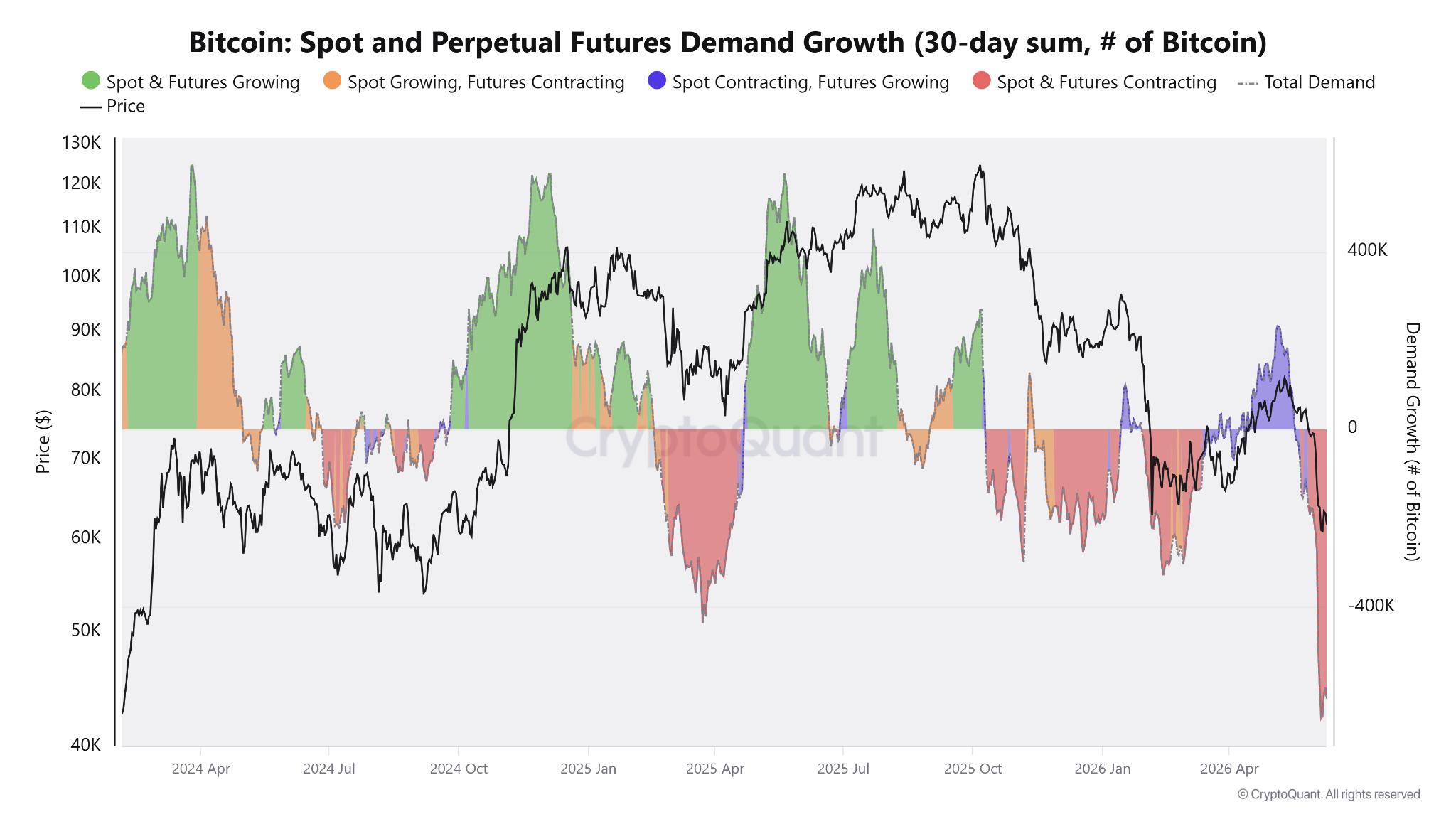
BTC: spot and perpetual futures demand growth contraction. Source: CryptoQuant
The relationship between BOJ policy and Bitcoin is often linked to the yen carry trade. For years, investors borrowed yen at low rates and deployed that capital into higher-yielding assets, including stocks and cryptocurrencies.
When the BOJ raises rates, some of those positions may be reduced, weighing on risk assets. The increase in July 2024 coincided with one of the biggest carry trade developments in recent years and a sharp selloff across global markets, not just BTC.
The influence of that particular condition appears to be smaller today. The BOJ has already raised rates to 0.75% from -0.1% in March 2024, while Japan’s 10-year government bond yield rose to 2.68% from 0.63% over the same period.
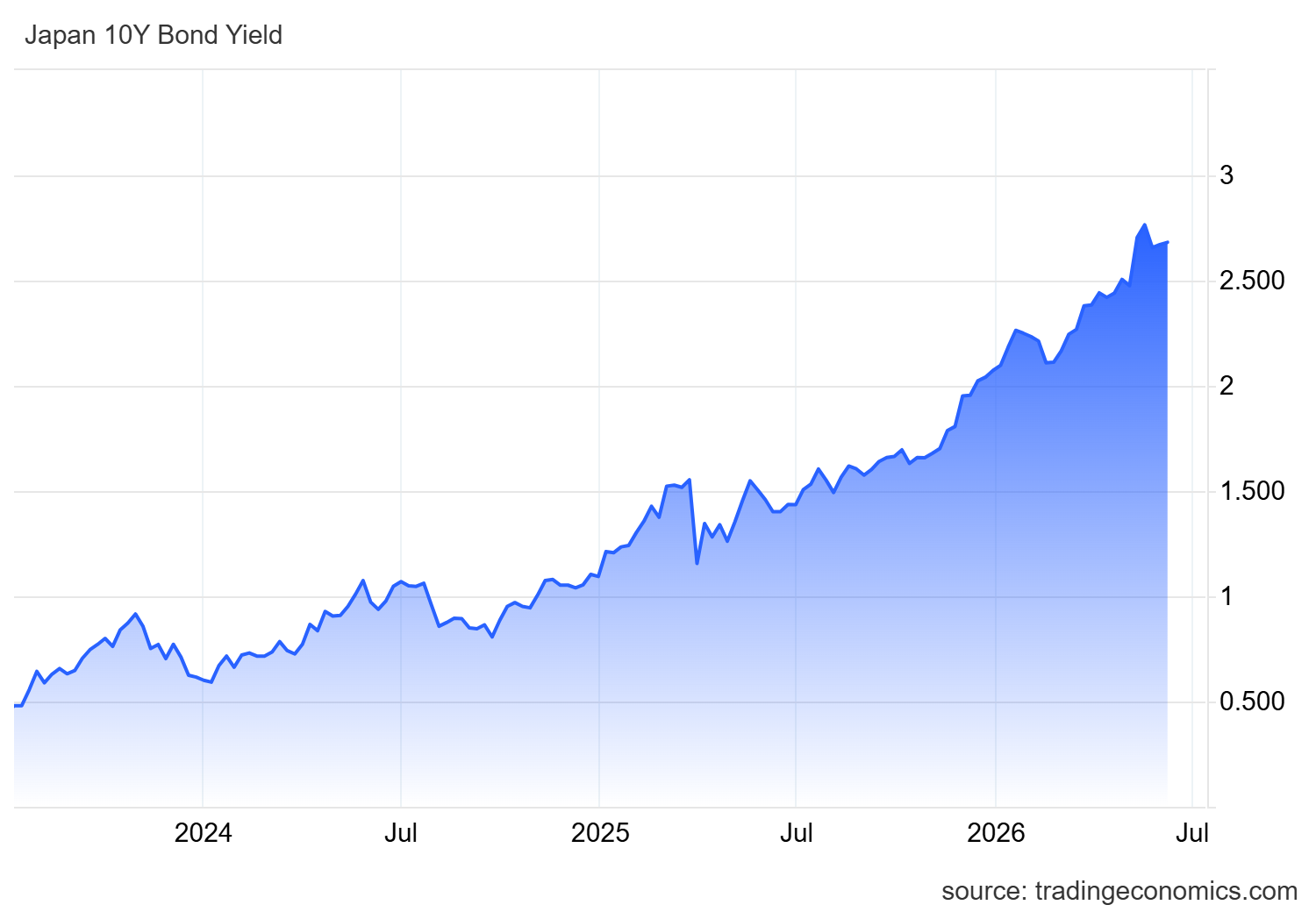
Japan’s 10-year bond yield increase since 2024. Source: TradingEconomics
With Japan’s borrowing costs already higher than during the negative-rate era, each additional increase represents a smaller policy shift than the BOJ’s initial move away from ultra-loose monetary policy. The June 16 meeting will extend an existing tightening cycle rather than introduce a new one.
Similarly, market analyst Cryptic Trades noted that concerns about a renewed yen carry trade unwind are overblown, arguing that Japan has effectively moved away from its deflationary policy framework in 2024. The analyst added,
“The Yen Carry Trade has been dead since 2024. It’s also a HUGE no-no for the markets.”
Related: Bitcoin Price Could Slip To $30K If Institutions Dump 450% Of Daily BTC Supply
BTC whales add to the pressure
While the BOJ meeting is a macro event that traders can monitor, onchain data points to a more immediate source of pressure.
Crypto analyst MorenoDV noted that Binance has recorded rising BTC inflows from wallets holding 100–1,000 BTC and 1,000–10,000 BTC since the sale began in early June. As a result, the exchange’s 30-day whale inflow total climbed to $6.6 billion.
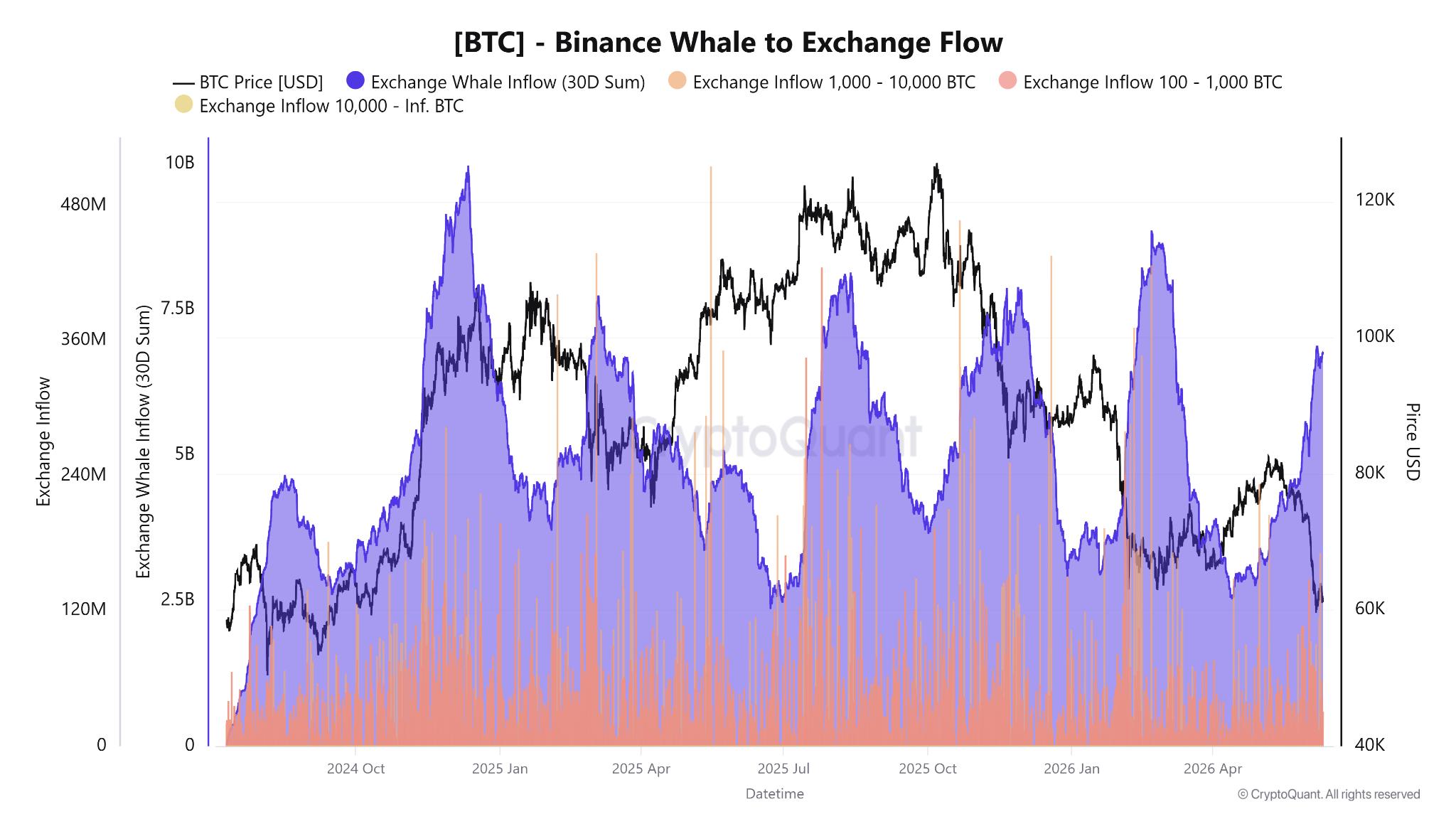
Bitcoin whale to exchange flow. Source: CryptoQuant
The pressure is already visible in realized activity. Short- and long-term whales collectively locked in more than $2.5 billion in losses during the decline, indicating that some large holders actively reduced exposure.
Short-term whales appear to be particularly vulnerable. The group is carrying about $16 billion in unrealized losses after briefly returning to profit for about 10 days in early May. Those positions are now near breakeven levels, creating a potential source of supply during rebounds. MorenoDV said,
“Taken together, these three readings describe the stress profile of a late-stage bear market: capitulating whales, spread in weakness, and a fragile short-term cohort with its finger on the trigger.”
Related: Bitcoin May Act as a ‘Canary in the Coal Mine’ as Risk Print Spreads: Bitwise
Disclaimer for Uncirculars, with a Touch of Personality:
While we love diving into the exciting world of crypto here at Uncirculars, remember that this post, and all our content, is purely for your information and exploration. Think of it as your crypto compass, pointing you in the right direction to do your own research and make informed decisions.
No legal, tax, investment, or financial advice should be inferred from these pixels. We’re not fortune tellers or stockbrokers, just passionate crypto enthusiasts sharing our knowledge.
And just like that rollercoaster ride in your favorite DeFi protocol, past performance isn’t a guarantee of future thrills. The value of crypto assets can be as unpredictable as a moon landing, so buckle up and do your due diligence before taking the plunge.
Ultimately, any crypto adventure you embark on is yours alone. We’re just happy to be your crypto companion, cheering you on from the sidelines (and maybe sharing some snacks along the way). So research, explore, and remember, with a little knowledge and a lot of curiosity, you can navigate the crypto cosmos like a pro!
UnCirculars – Cutting through the noise, delivering unbiased crypto news