Bitcoin historical prices
2010: The Genesis block
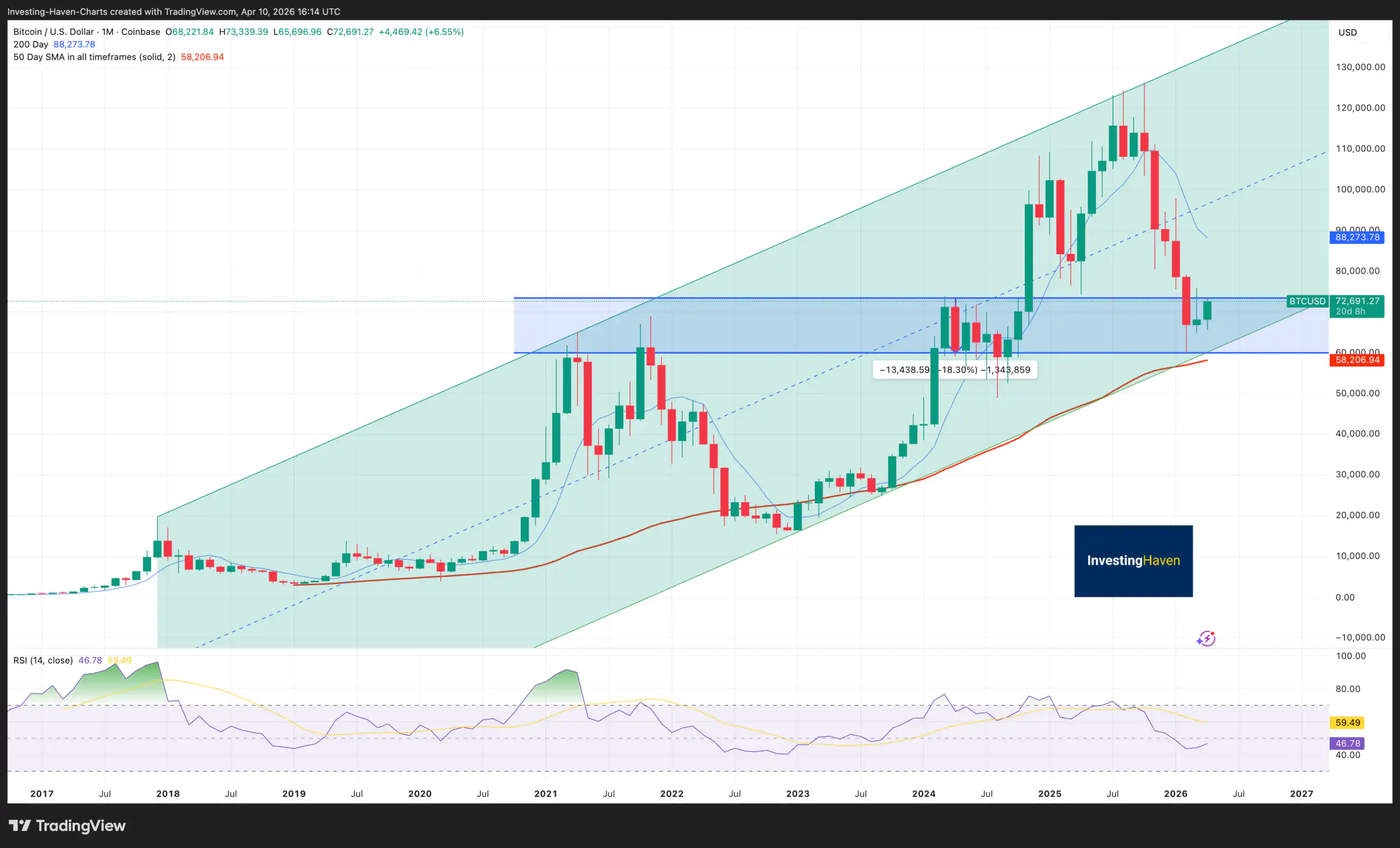
Bitcoin made its debut in 2010, with its first recorded price at just $0.003 per BTC. Trade was limited, and few recognized its potential. Despite its humble beginnings, Bitcoin laid the groundwork for a revolution in digital finance. The first block was actually mined in 2009, with the words “The Times 03/Jan/2009 on the brink of second bailout for banks” enrolled.
2011: Early adoption
As awareness of Bitcoin grew, so did its price. In 2011, BTC reached parity with the US dollar and traded at around $1 per coin. The coin gained traction among tech enthusiasts and libertarians, heralding the start of a new era in finance. At this point it was considered much like a meme coin like Doge, with no serious potential.
2012: Price volatility
Despite its growing popularity, Bitcoin’s price remained highly volatile in 2012. Prices ranged between $5 and $13 per BTC, reflecting the speculative nature of the market. However, this volatility did not deter early adopters, who saw the long-term potential of digital currency. The mainstream media was mainly hyper-critical of the sign and remained so until 2024, when it became institutionally acceptable.
2013: The Bull Run begins
In 2013, Bitcoin experienced its first major bull run, with prices rising to over $1,000 per BTC by the end of the year. The meteoric rise caught the attention of mainstream media and investors worldwide, sparking a frenzy of buying and speculation. However, this rapid rise has also raised concerns about the sustainability of the rally.
2014: Mount Gox Collapse
The optimism of 2013 was short-lived – the collapse of the Mount Gox exchange sent shockwaves through the cryptocurrency community. Prices have fallen, from over $1,000 to below $400 per BTC. The incident highlighted the risks associated with centralized exchanges and the need for tighter security measures in the industry. Others have said that crypto was never meant to be held in centralized exchanges in the first place.
2015: Market recovery
Despite the fallout from the Mount Gox debacle, Bitcoin began to recover in 2015. Prices stabilized around $200 to $300 per BTC as investors regained confidence in the cryptocurrency’s resilience. The focus has shifted to building a more secure and sustainable ecosystem for digital assets.
2016: Halving Hype
The Bitcoin halving in 2016 generated renewed interest in the cryptocurrency as supply dynamics came into focus. Prices began to climb, reaching over $700 per BTC by the end of the year. The event highlighted Bitcoin’s deflationary nature and its appeal as a store of value in an uncertain economic landscape.
2017: The Year of the Bull
2017 was a watershed moment for Bitcoin as prices soared to unprecedented heights. BTC hit an all-time high of nearly $20,000 per coin, driven by a perfect storm of institutional interest, retail FOMO, and mainstream adoption. However, the rapid rise has also led to concerns about a potential bubble and regulatory crackdown. The same day that futures were launched on major exchanges, BTC prices dropped, leading some to cite insider trading and fraudulent activity..
2018: The Crypto Winter
The euphoria of 2017 was short-lived as Bitcoin entered a prolonged bear market in 2018. Prices fell, falling below $4,000 per BTC as regulatory uncertainty and investor fatigue took their toll. The ICO industry was also full of hacks and scams, which scared away some of the more influential investors.
2019: Signs of recovery
Despite the challenges of the previous year, Bitcoin showed signs of resilience in 2019. Prices gradually recovered and climbed back above $10,000 per BTC by the middle of the year. Institutional interest has also begun to grow, with major corporations and financial institutions exploring the potential of digital assets. The stage was set for a new chapter in Bitcoin’s evolution.
2020: The Halving Effect
The Bitcoin halving in May 2020 once again caught the attention of the market as supply issuance was cut in half. Prices rose, surpassing $20,000 per BTC by the end of the year, fueled by a combination of institutional acceptance and macroeconomic uncertainty. With COVID-19 well under way, BTC’s value as a hedge against inflation has been a contributor to its growth.
2021: Institutional Adoption
In 2021, Bitcoin cemented its status as a mainstream asset class as institutional adoption reached new heights. Prices have risen to over $60,000 per BTC, driven by corporate treasuries, investment funds and billionaire investors. This also led to other coins rising in value as it was the best performing year for the broader crypto industry. However, regulatory scrutiny and environmental concerns have also emerged as key challenges for the cryptocurrency industry. One study in particular about BTC use more electricity than most countries did a lot of reputational damage.
2022: Market correction
After the euphoria of 2021, Bitcoin faced a market correction in 2022 as prices retreated from their all-time highs. Prices ranged between $30,000 and $50,000 per BTC, reflecting a more cautious sentiment among investors. The pullback was seen as a healthy consolidation after the rapid gains of the previous year, providing opportunities for long-term investors to build. As we’ve always said at IH, market corrections are great buying opportunities – assets aren’t going to go up in a straight line forever.
2023: Resilience and adaptation
Despite the challenges of the previous year, Bitcoin continued to demonstrate resilience in 2023. Prices stabilized around $40,000 to $60,000 per BTC as the cryptocurrency found support from institutional investors and retail traders. The focus has shifted to addressing scalability and sustainability issues, which lay the foundation for future growth and adoption. The narrative that Bitcoin was an ancillary asset eventually died, and even TradFi investors like Jamie Dimon and Warren Buffet had to reevaluate their valuations.
2024: Bullish Breakout Confirmation
Bitcoin consolidated its bullish breakout in 2024 and maintained prices between $36,000 and $75,000. Institutional adoption has grown, and mainstream acceptance has cemented its position as a core portfolio asset. The year marked the end of the “fringe asset” narrative, as even skeptics recognized Bitcoin’s resilience and long-term potential.
2025: Institutional momentum and new highs
Bitcoin entered 2025 with strong institutional headwinds, fueled by record ETF inflows and accelerating corporate adoption. Prices rose to new highs above $126,000. While occasional pullbacks tested market sentiment, the overall trend remained decidedly bullish. Regulatory clarity in major markets and growing recognition of Bitcoin as a strategic reserve asset has strengthened its role as a cornerstone in diversified portfolios.
Disclaimer for Uncirculars, with a Touch of Personality:
While we love diving into the exciting world of crypto here at Uncirculars, remember that this post, and all our content, is purely for your information and exploration. Think of it as your crypto compass, pointing you in the right direction to do your own research and make informed decisions.
No legal, tax, investment, or financial advice should be inferred from these pixels. We’re not fortune tellers or stockbrokers, just passionate crypto enthusiasts sharing our knowledge.
And just like that rollercoaster ride in your favorite DeFi protocol, past performance isn’t a guarantee of future thrills. The value of crypto assets can be as unpredictable as a moon landing, so buckle up and do your due diligence before taking the plunge.
Ultimately, any crypto adventure you embark on is yours alone. We’re just happy to be your crypto companion, cheering you on from the sidelines (and maybe sharing some snacks along the way). So research, explore, and remember, with a little knowledge and a lot of curiosity, you can navigate the crypto cosmos like a pro!
UnCirculars – Cutting through the noise, delivering unbiased crypto news